
OUROBOROS WITH A BROKEN TAIL
I spent the last night
of December poking yellow bruises.
This whole year I was unkind to most, and most
of all myself. I lapsed. I lingered on thresholds
dreading what I’d find of myself inside,
let cold air pour over the party.
I spent money like a fool in love, but all
I loved stood inside steamed up windows
unsure of what was left to say. The party moved
in one big sway away from me.
I let it happen.
Midnight splits me in two. On one hand
is a ring, tarnished by all my failures
to date: too much booze, no baby, still, a loss
of love for time and how it moves me.
In the other hand is nothing.
Nothing yet, a hopeful gal might say,
but that gal is kissing her man inside
and I’m still on the porch counting
all the seconds I’ve done nothing wrong this year.
Yet. I resolve:
If I batter, I will soothe. If I cut,
I will mend. I will close doors
and my mouth, open my legs
to the calendar’s demands, scrape
the bottom of the bag of luck with my teeth
and tongue. It starts with me incanting rabbit, rabbit
in a cloud in the night, ripping open
that old wives’ tale for a scrap of hope.
I will go back in. I will it. I will –
MANDATE OF HEAVEN
in the years that followed the saltflat floods
my garden suffered. even weeds refused to breach.
the till was always within reach, but I didn’t
want to blister over something dead.
I could have prayed for rain, but being faithful
seemed just another name for stupid. God
and His botherers offered platitudes
and ok, some hymns, a fever dream
of angels, wine by the thimble, a blueprint
for prosperity – but I wasn’t raised to follow men
or plans. I bucked the word. I spread myself
thin in town and abandoned that whole plot.
fickle bitch I am, I had to look back. the salt
stuck in just where I left it, seasoned
my tongue when the wind blew.
so nothing new would grow, ok, but I had
seen light dance on broken glass, chipped teeth
on stone, honored deadwood shaped by knife or beetle.
I learned to make the best of what I had.
who said it had to be a garden? I got wild
in the dusty remains, piled rocks, carved
faces in stumps of firewood trees. I changed
the way I moved the world. hear me:
it wasn’t like I woke up one day different
or better than I was before, more like I’d sunk
so low the only way left to go was up.
Do what you will with that.
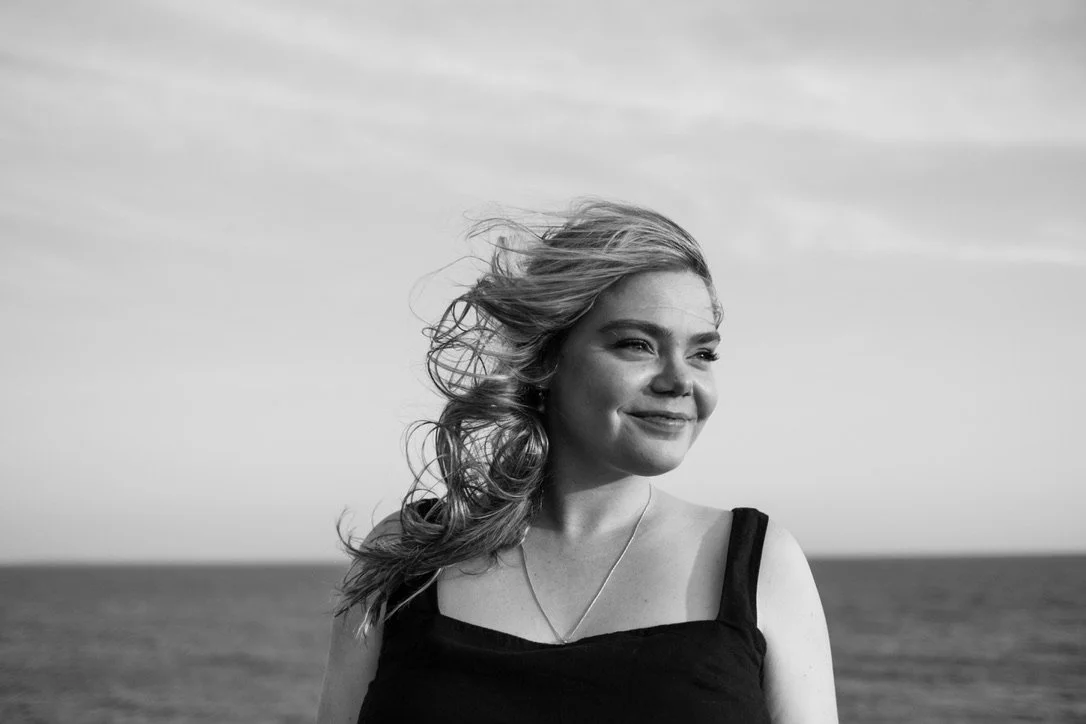
Suze Kay is a pastry chef in New Jersey. Her poem 'SELFISH GIRL', originally published in The Turning Leaf Journal, was included in the 2026 Best of the Net Anthology. She’s happy you found her here and invites you to find more of her work on her website, www.suzekay.com.
Why this Knocked Taylor Out:
I was really drawn to two different things in these poems: their tone, and how the syntax and shifting between sentences builds that tone. The phrasing in here, combined with some subtle but present sound work, along with fresh and surprising diction really brought genuine joy to my reading experience. I had fun reading and re-reading these. I think these poems manage "energy" (as esoteric as that is) really well and each of these felt wry but honest in a way that I love. And the ending is perfectly described as a perfect landing.
In “Ouroboros…” theres a gentle forcing of the “I” which centers the “will” of the speaker (emphasized by the ending). This contrast between the inevitably of the Ouroboros cycle and the idea of self-agency is wonderfully handled, especially with the title “broken tail…”. Do we open our legs or are we opened?
In “Mandate…” I just want to spend forever in the phrase “fickle bitch I am.” I love this whole poem but this is a line you underline seven times in red ink so a future you can know how much you loved it. And then the ending, now the will is forced on the reader. We can decide both how to interpret the speakers journey through faith and self, we can interpret what the poem is trying to say, or we can (mis)interpret the speaker themselves. Truly wonderful.
Interview:
Why did you choose Team Taylor for these poems?
I am loyal to #teamtaylor since she accepted one of my first favorite poems. The concepts she gravitates towards (principally God and The Body) continue to haunt my work. I think we fit.
You were published here at BRAWL in November of 2024, what has changed in your work since then? How do these poems represent your evolving poetics?
In short, I have become more confident in my editorial process. I used to be afraid of losing the lightning-strike power of a poem by touching it too hard, mostly because I didn't yet trust my own voice. For example, MANIFESTING was written in a day and accepted by BRAWL within the month. I wouldn't change a single word of that poem, but I work more slowly now. Both OUROBOROS and MANDATE were drafted long before submission.
I always knew OUROBOROS was a resolution poem. It was drafted (and set) in Autumn 2024, but its core was fluffy. It read like "Wouldn't it be nice if I were better?" Blah! The poem needed me to live longer and resolve harder. Throw in a tough NYE 2026, and it finally gelled. For the first time while editing this poem, I was able to greet my internal critique with gratitude. I kept three lines and nothing else, not even the title, and it became the poem I always wanted it to be.
MANDATE originally floundered in submission before I put it in a year-long time-out. After an enlightening enjambment workshop taught by Todd Dillard, I felt inspired to reapproach the poem. He gave me the tools I needed to transform the motion, breathwork, and imagery that make it sing.
Do you see these two poems in conversation at all? If so, how? If no, how do you think about writing poems that are disconnected from each other and continuing to follow what your poetics demands of you even if there are different pulling forces?
It wasn't until these poems were accepted as a pair that I realized how lovely they link up together. It's a little mystery to me: how did I put together my submission package without recognizing the echo of their endings? I've long been fascinated by the Crowleian statement, "Do what you will is the whole of the law." Though I am no occultist, I love the creed, so I'm not surprised to see it rippling through both of these voice-driven pieces. I originally wrote them in different cycles (OUROBOROS for a fabular set, MANDATE for one about secular divinity), but both are what I consider 'hinge poems'. In each, the speaker undergoes a transition. She deals with the interplay of time and identity, the type of self developed in isolation, and tells an "up to now" story. And I guess they're both me, in different moods and mores.
As I approach developing a collection, I've had to broaden my understanding of what can link a poem to another. Most of my favorite collections consist of a clear, singular story - "Stag's Leap" by Sharon Olds and "Helen of Troy, 1993" by Maria Zoccola come to mind - but I struggle to write exhaustively on one subject at a time. For now, I'm enjoying the poems as they come and trust that, with time, I'll see more clearly how they interact with one another.