
This Day
Stub it out:
the cigarette,
youth,
a minute,
a friend,
no one.
Bite the stone
shadow.
Crack the night
between your teeth.
Write me
writing you
breaking
the pale branch.
I stand in a corner
and piss on the moonlit plaza.
Ryan Di Francesco
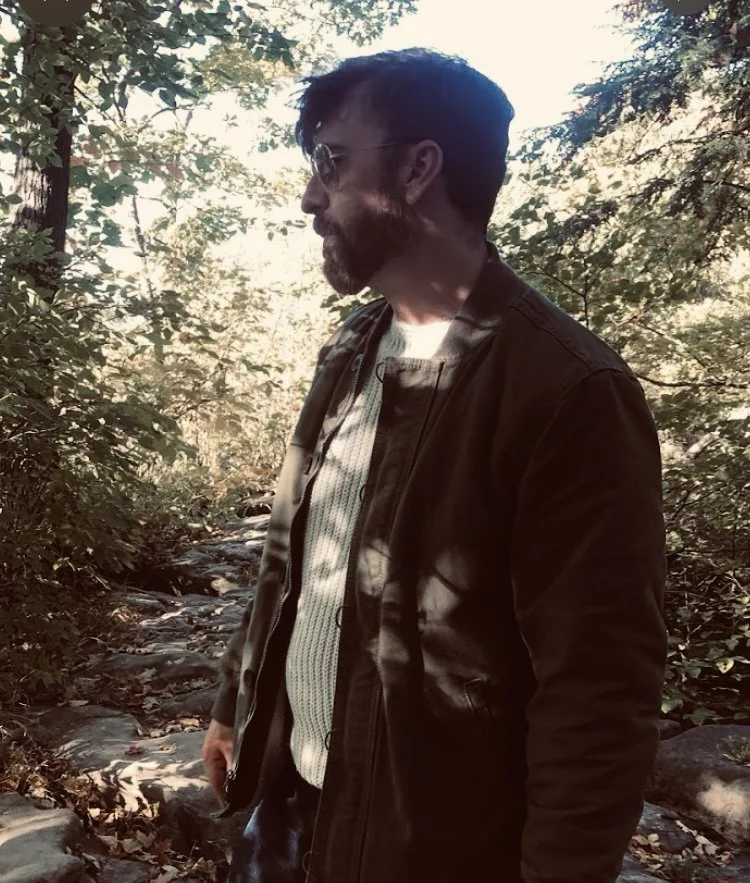
Ryan Di Francesco (he/him) is a neurodivergent Canadian writer, teacher, and Editor-in-Chief of Shadow and Sax Press. His journalism has appeared in The Toronto Star, and his poetry and fiction have appeared or are forthcoming in ExPat Press, Acta Victoriana, Pacific Review, Poetry Pause (League of Canadian Poets), Pinhole Poetry, Apple Valley Review, Jagged Edge, and elsewhere. He is the author of the chapbooks Mirage of Burning Things (Parlyaree Press), Skeleton Mine Disaster (Bottlecap Press), and The Paper Hound and Canadian Classic (Alien Buddha Press). His full-length collections Along Tongues Full of Time (Ethel Press) and Let the Dogs Have It (Parlyaree Press) are forthcoming.
Why this Knocked Taylor Out:
This is a poem that feels like a steady beating rhythm, progressing toward into a steady stream (sorry pun intended). You can really see the Lorca illusions in this poem which I really appreciate (maybe even a little Pound as well?). The strangeness of the ending, the images with the mouth and all the strong verbs there are really working for me. I love that we have all this mouth imagery and then end with pissing. Like through the poem we digest the moon. Wonderful. The poem is both looking inward and outward. To the past, “youth,” and to the now. Within this short poem we have a ton of great imagery, “biting a stone shadow,” “cracking night between teeth,” and ultimately I am nothing if not a sucker for a wonderful punchy strange ending. I think Lorca would be delighted by pissing moonlight. I think he would reach over and light this poem’s cigarette himself.
Interview:
Why did you choose Team Taylor for this poem?
I've admired the work Taylor's team publishes for a while. The journal consistently embraces poems that take risks with image and strangeness while remaining emotionally alive. I've also appreciated the anti-ivory-tower spirit of the work you publish. This Day felt like a poem that might resonate because it's experimental and raw while still being carefully crafted. It trusts the reader, and I had a feeling Team Taylor would too.
Talk to me about your relationship with Lorca.
Lorca is one of my favourite poets. He is one of the essential ghosts who has taught me that image isn't decoration—it's a way of thinking. His poems seem to play through my mind constantly. What I admire most is how they move by emotional and dream logic rather than explanation. They make impossible things feel inevitable. They're absurd yet intelligent, imaginative yet deeply rooted in feeling. I don't try to imitate Lorca, but I return to him often because he reminds me to trust the image before the explanation.
The body and embodiment really carry this poem. How does that factor into your work and how do you think about the body as you write?
The body is where language begins for me. As a neurodivergent writer who struggles with energy, perception, and the way thoughts move through me, I tend to think of thinking itself as something physical rather than abstract. Memory lives in our shadows. It's caught in our tendons. It lingers in rooms, on specific streets, in plazas, on park benches, and in fields and alleys.
Every experience carries weight. Words have texture and sound... I feel as though they attach themselves to invisible stems that lead us back to memories, emotions, and lived experience - if that makes sense.
Images arrive through the senses before they become ideas. My work often blurs the boundaries between body and landscape, object and self because that's how experience feels to me. The body isn't just a subject in my poems: it's the place where perception, memory, and language collide.
I also love writing that uses simple language but elevates it. If a reader needs a thesaurus to get through a poem, I think the poet has failed the reader. Poetry should invite people in rather than test whether they know the right vocabulary. I want my work to be accessible without sacrificing complexity, to trust that depth comes from image, rhythm, and emotional intelligence rather than obscurity.
Sometimes contemporary poetry can feel as though many voices have been trained toward the same aesthetic. I'm always trying to write against that impulse, committed to finding and protecting my own voice rather than reproducing a trained one. I want the poems to feel instinctive, embodied, and unmistakably my own.