
The Little Girl Who Swallowed the World Whole
I imagine the Earth
hidden in the crystal eye socket
of a hanging rabbit in the butcher’s shop
would remind me of my mother’s iris
Olga Yatsenka
Olga Yatsenka is an emerging poet and translator who was born in Brest, Belarus. Her work can be found in Plume Magazine, Canon Translation Journal, Just Poetry, and elsewhere. She grew up in a Pentecostal community in Northern California and entered adulthood through foster care. Olga writes about the elusiveness of memory, generational cyclical trauma, and queerness. She is based in Michigan.
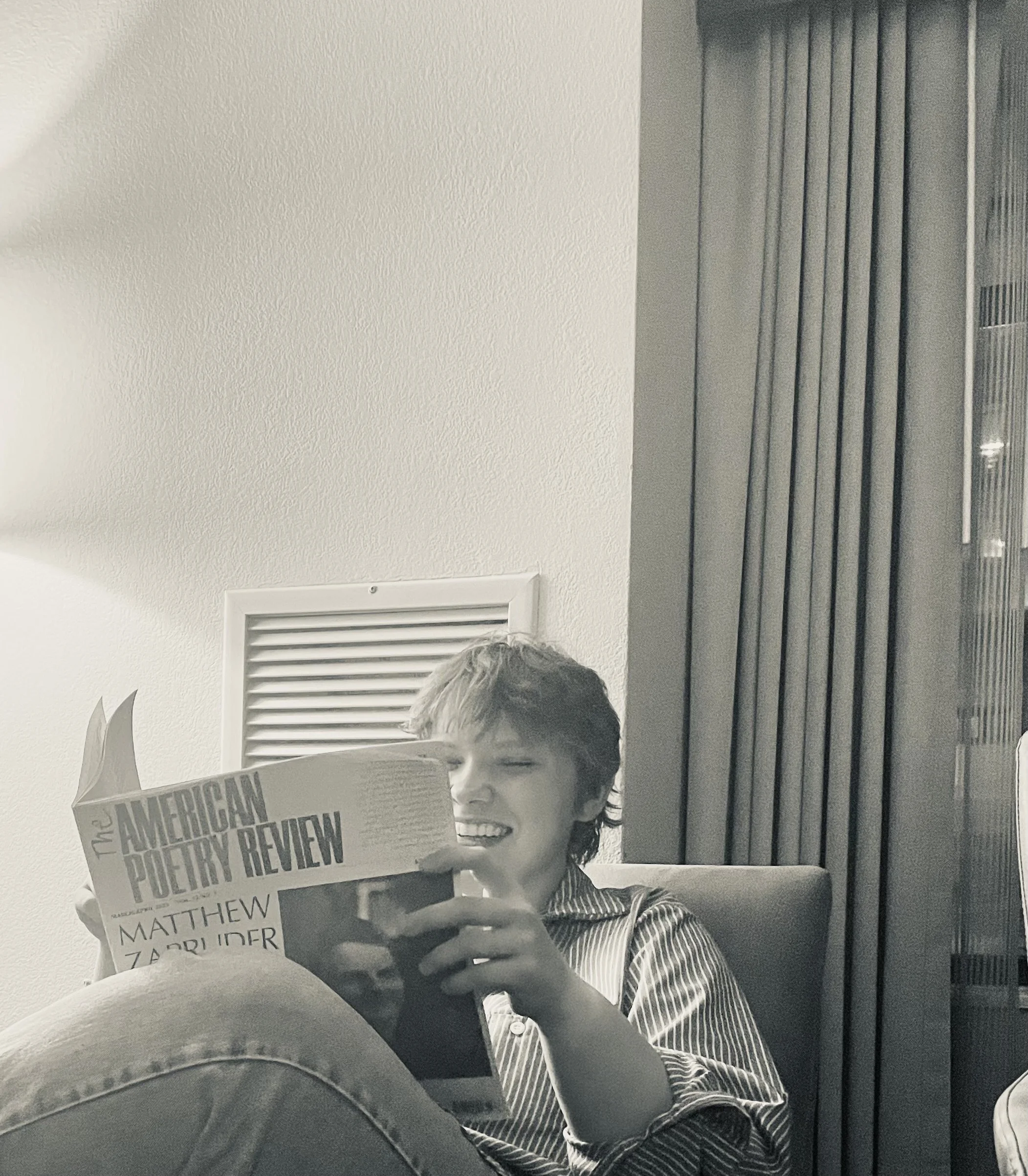
Why this Knocked Taylor Out:
The brevity here is doing a lot of work for me. The title carries a lot of weight and just the layers of image work happening are really compelling. This poem says a lot without very many words and I personally was really intrigued by it from the jump.
I’m not usually a brevity girl but I was so surprised with each word and image that came to me even within a tight space that I had to have this poem. The mother is both the whole world and swallowed. The girl swallows the rabbits earth eye. Wow.
Even within this short space the lines work to add syntactically surprise. We don’t know what the poem is building toward until the final line, and then we must reread to fully grasp the poem, it’s myriad complexities.
Love.
Interview:
Why did you choose Team Taylor for this poem?
While my poem does not use "the body" in its text, it entirely references human/non-human anatomy and given that my poem borrows from ecopoetics, I thought Taylor would enjoy this. Oh and the little bit of mom trauma that is implied in the text too.
The figure of the mother, though mentioned briefly, rests over this entire poem. Talk to me about how this poem situates the "mother" and the "little girl."
When I wrote this poem, I was drawing inspiration from one of my favorite novels, "Catch the Rabbit" by Lana Bastašić where at the end of the novel, the protagonist is standing in front of Albrecht Dürer’s "The Young Hare" and she leans closer to examine the hare's eyes and in them she sees herself. That image really stood out to me because while it represented something different in the novel, in my own life I reimagined the metaphor as a mother-daughter relationship. Often as children, our parents are our whole world and often, vice versa. When writing this poem I had a very clear image of a child holding the undigested and unfiltered world of its parent — the cyclical trauma and memory passed on from generation to generation.
What does the role of brevity play for you in this poem? Why is this poem four lines, instead of say forty?
It is actually very uncommon for me to write short poems. I typically enjoy telling a more drawn out story, but in this case, I felt that the brevity holds more space for the emotional and mental weight that I associate with the poem. Plus, at the time when I wrote this, I myself had very few words with which I could describe my relationship to my mother and familial lineage.