
otherworld birth story
coastal moor wan sun
clouds like shells
curl in on themselves
taking the wind
to heart
heather sedge and moss
carpet the top
of a crumbling
cliff
limestone
whittled
to new buildings
twisting the shoreline
a hall of mirrors each shadow-box window
holding
a sculpture
of another woman’s child
barnacled vined
and so
still alive
a series of glass steps
for giants
silver-haired midwives
who knuckle a moon crater tide pool
so I can meet you
fill and drain
with motherhood foamed bones
my head
snapped to the sky the water
warmer and warmer
a sharp fizz
and mineral scent
of two worlds’ oceans
mine and yours
as they ladle you pebble-robed
into my arms
Melissa Shepherd
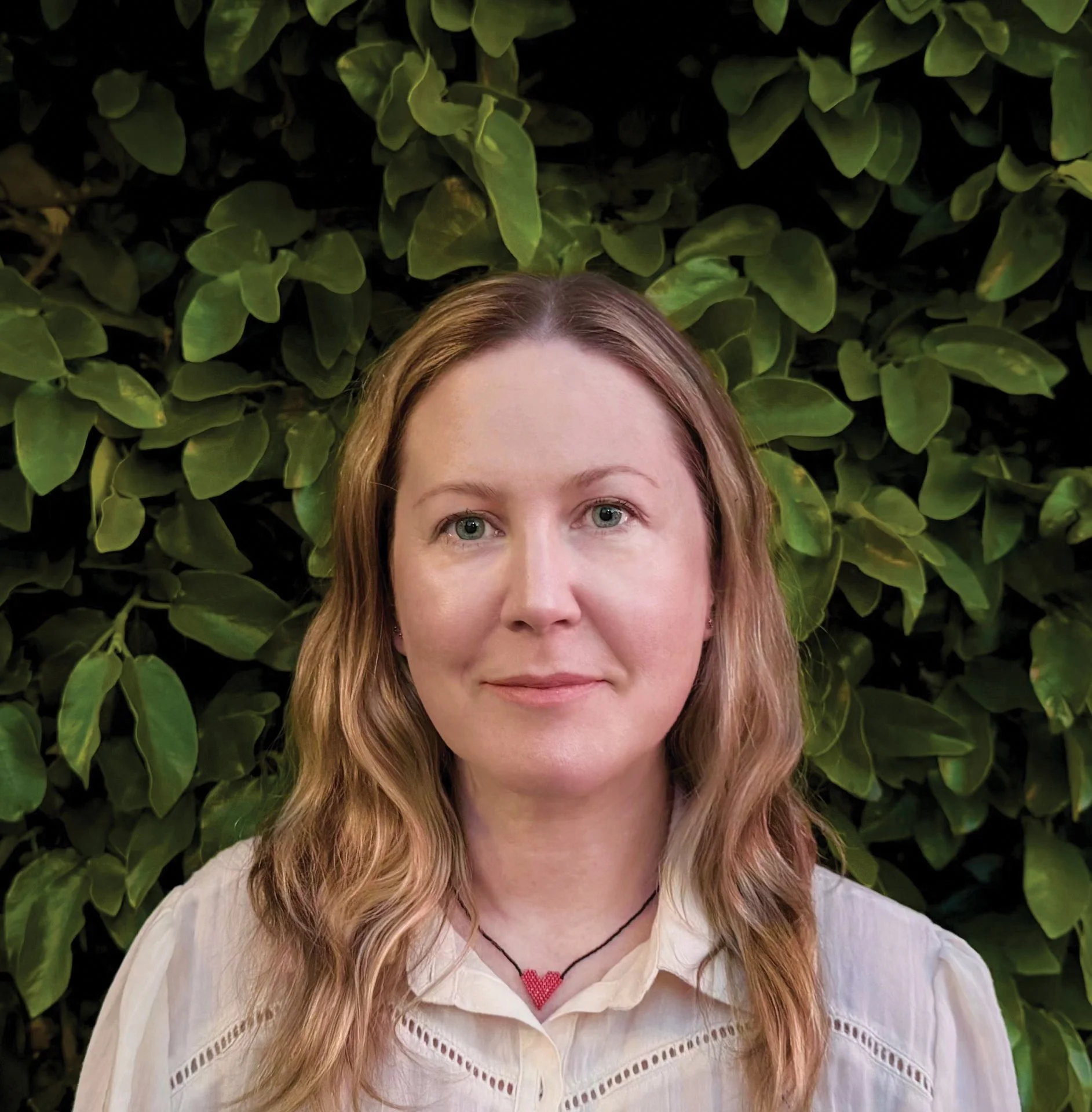
Melissa Shepherd is a writer and arts advocate who lives in Hoboken, NJ. Her work has appeared or is forthcoming in Good River Review, Jarnal, Twin Bird Review, Thimble Literary Magazine, and The Dread Literary Review. She holds an MFA in poetry from the Naslund-Mann School of Writing at Spalding University and recently completed her first full collection of poems, Keys to the Emptying House. www.melissashepherd.info
Why this Knocked Taylor Out:
The form!!!! The ending!!! The gut punch of "still alive" PHEWWWW. I'm obviously in my motherhood era and accepting a lot of poems in this vein but each one, (this one included) is so interesting and different. The fragmentation and the images really build the otherwordlyness and the allusions to an ancient kind of motherhood and a very present and now grief are really powerful. Love love love.
I don’t know even reading this back over and over to try and write something more eloquent sometimes the answer is a poem reached right into my chest and ripped my heart out and I get that’s a cliche but its true. That ending is just, think about it…laddling a “you” into arms which inherently cannot perfectly hold the “you” as it will inevitably slip through the tracks but the effort is still there. The image is just incredible. All the images are incredible.
And tbh I have a lot of thoughts about motherhood / the desire to be a mother and how we interact with this sacred role in our post modern post capitalistic hellscape but at the end of the day THIS POEM is awesome and I love it.
Interview:
Why did you choose Team Taylor for this poem?
I chose Team Taylor first and foremost because I felt such a joyful vibe from your "About" page. When I read that you like poems about the body and surrealism, plus you had just given birth, I thought "otherworld birth story" might resonate; a poem that considers that most surreal place, the female body in labor.
Did the form of this poem come first, or the language? How do you navigate working those things together cohesively?
The opening few lines came to me first, then the words and form developed in tandem. Typically my work leans pretty hard on the boxy stanza, but that structure didn't feel right here. From the start, I knew the poem needed a more active space to approach the experience of childbirth. I tried to follow my intuition in terms of the lineation, while also making overt gestures to the setting and the scene as it unfolds.
Talk to me about your writing process in general, what does it look like and how does it help build toward your present body of work?
My poems usually begin as a kind of cinematic scene, real or imagined (or a mix of both). I often enter a poem with a specific reader in mind, then I branch out from there. I try to keep the overeager editor in my brain at bay until the scene plays out. Then I let her have her say, which means copious notes and many revisions. Having just finished a collection that mainly contemplates family relationships and transformation after childhood trauma, I find myself feeling more open to the wider world—shared culture and inheritance, shared problems and possibilities.