
Straight Talk
My skills just leveled up. My shit’s over 9000. Mastered
the art of straight talk, man. Now I say it how it is
& I say it the way you do, homie. My guy, my
guy. When I’m out with the boys, got a good pump
going, drop my voice an octave. What up?
What’s good?
Yeah, bro, I’d hit that. Wouldn’t you?
& no, you’re not trippin’
sure that dude was hitting on you,
(they all want you)
& facts!!
your girl should def be loyal
while you drown in more pussy than your little prick
can handle.
Nah, I ain’t mean it like that. Deadass,
you hate females but can’t help the attraction.
When I took you in my mouth
last week, I only gagged on your ego.
ESPN in the background. Touchdown! Homerun!
Word, it’s only gay if I don’t say the magic words?
No fucking homo, bro.
Kashawn Taylor
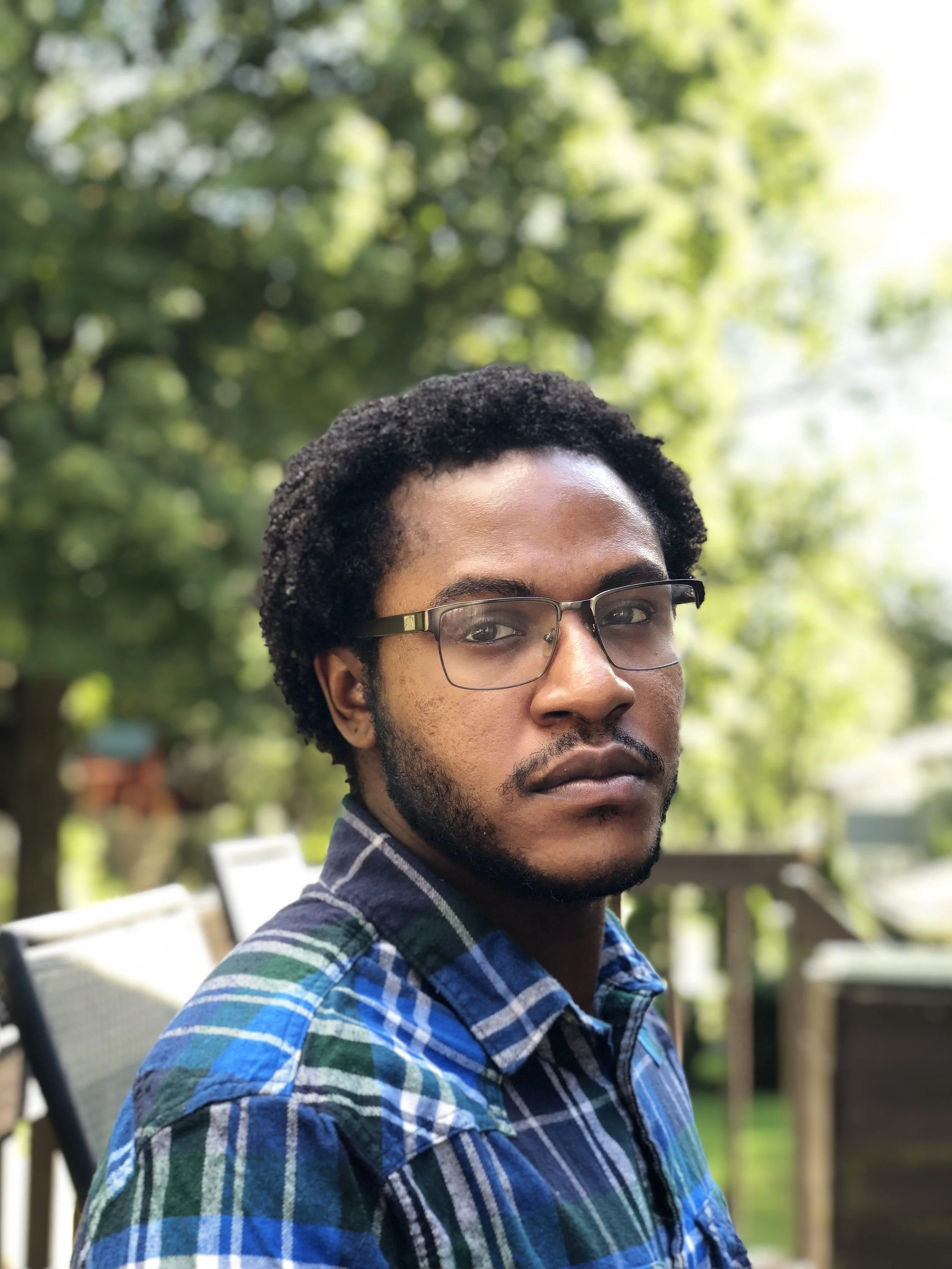
Kashawn Taylor is a queer, formerly incarcerated writer and educator based in CT. His poetry, short fiction, and essays have been or will be published by such journals and magazines as The Poetry Lighthouse, Lucky Jefferson, Oyster River Pages, The Offing, Sequestrum, The Ilanot Review, and Poetry Magazine. His full-length collection of poetry, subhuman., was released by Wayfarer Books in March 2025. He currently teaches with Gotham Writers Workshop and works with Prison Journalism Project as the 2026 Audience Engagement Fellow. Follow him on Instagram: @kashawn.writes
Why this Knocked Taylor Out:
There's a few things I was really drawn to with this piece. The first is actually the first two uses of italics. The emphasis on "my" and "good" really highlight a kind of real desire underneath the colloquial conversational nature of the "talk" of the poem. The conversational nature of the poem is also compelling in how the speaker is the only "voice" we hear but because of the nature of the language we understand the "you" much better. This aligns somewhat with MICHAEL CHANG’s recent poems that we published last month.
Also, this is just honest and raw in a way that moved me. I can “analyze” “poetry” all “day” long but if my heart is moved my heart is moved. Getting to peak inside what it might be like to be queer and incarcerated is also compelling both because the compounding factor of two difficult situations is interesting and also because it reminds (me at least) that the human experience is so much vaster than my small plane of existence and reminding ourselves of that is important and allows us to deepen our connection to others. Which is something all good poetry does.
Interview:
Why did you choose Team Taylor for this poem?
I chose Team Taylor because I thought Taylor might like the brashness of this poem. Deep down, this poem about society, right? How one person puts on an obvious act to conform to the norms society imposes while the “you” in the poem doesn’t need to put on an such an obvious act, but is acting nonetheless. Those are things no one teaches us, things we inherit from society – through media, books, people watching. I thought Taylor might enjoy the layers of this onion of a poem. Also, the first name-last name connection, duh.
Your bio mentions being both queer and formerly incarcerated, and this poem seems to be in direct conversation with both of these aspects of your identity. When you think about vulnerability in poetry, how do you go about it? How conscious are you of letting people into that side of you, and how that works alongside your poetics?
When it comes to vulnerability in my poetry – and my writing in general – I write as if no one is ever going to see it. I write for myself, knowing damn well I am going to try to put these in the world somehow. I’m always conscious that someone I know might read something, but I say damn the torpedoes and do it anyway. I think that’s what resonates with people: the level of vulnerability and candor I write with. Plus, it’s kind of fun to talk about those things in writing. I love therapy, but writing is free.
The idea of "voice" is really strong in this poem. The voice "drops" an octave and the "voice"/performance of the speaker is really plain. How important is this "voice" in the rest of your work and how is this piece in conversation with the rest of your poetic discography?
This piece has such a unique kind of voice. It feels like it’s meant to be performed. While this voice makes appearances throughout my poetry, I think this piece stands out. I can only think of one other poem where this voice shines through so brashly. Other times this “I” makes an appearance, it’s through cheeky references, humor, and in-your-face lines. This idea of “Straight Talk” was a fun (for me, at least) way to address something that’s been on my mind for a while and that’s performance, which is an idea that has inspired my recent poetry quite a bit.