
Losing Faith
Only cold metallic shimmer, seismic rumbling, plain white hills. The digital dream. It says welcome to the future it’s time for an upgrade. Our minds will mesh like newlywed gears. It says we’ve brought back common sense all the scams have been terminated. The floor is hollow, the ceiling is listening. Keep climbing to greatness, liberation day. It says pay no attention when the sharp edges in the floor draw blood from your soles. Why don’t you make a purchase? The golden age. Dramatic and immediate relief. Some jeans! Check out the Good American collection, a tsunami of prosperity. Let the mechanical birds tweet out hymns of joy. We are doing our best to get egg prices down. We have ended the weaponization of justice. If you invade yourself like Ukraine we are not responsible for the consequences. It will be OK. This land is our land. We don’t give our names, but believe us. We are the police we’re getting the bad people out of our country all cultures cancel. This land was your land. You’re going to have to come with us. Now you, alone together, as you have always been. The black hole.
Flailing in silence
down polished steel throats
our own private beast
This is an ekphrastic haibun in response to the sculpture “Losing Faith” by Marc D’Estout (fifth little bubble from the right on this page from the artist’s website).
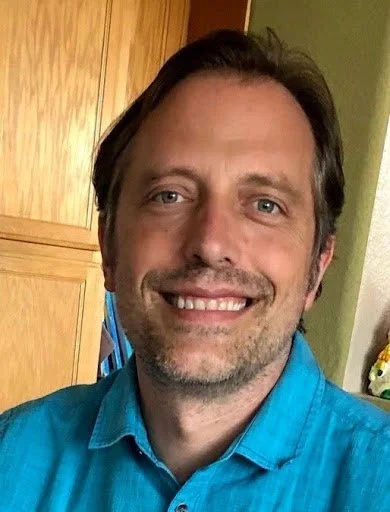
Ethan Stanton
Since Ethan Stanton was six years old, he knew he had to be a writer. He has also always known that he had weird stuff in his head. It took the pressure cooker of pandemic parenting along with the explosion of Zoom classes for him to finally make the connection between those two things and start writing poetry. His work has been published in Vita Poetica, Dispatches from Quarantine, and Amethyst Review.
Why this Knocked Taylor Out:
Well first off, I love getting to take a second look at poems that I ~liked~ see them revised into something I love! And the great thing about this was it was just a few small adjustments and all of a sudden the poem and all its wonderful sardonic tones are singing!
This is a biting haibun full of great classical and contemporary references AND it's ekphrastic which is incredible. There's so much layering of craft and poetic lineage that I'm super impressed by. I’m always interested in poetry that kind of refuses beauty or easy answers. This poem looks a lot of hard things right in the face and I’m into that.
And I think this is a great poem to read on “Black Friday” to remind yourself that everything is 100% when you don’t buy it (: (orrrr support small businesses!!)
Interview:
How did you go about writing an ekphrastic haibun?
I was asked by the Triton Museum in Santa Clara and Poetry Center San Jose to pick a work of art on display at the museum and write an ekphrastic poem. A group of us were commissioned to write, and then we all read them in the gallery next to our chosen pieces. I didn't have much ekphrastic writing experience, so I wasn't sure what to expect.
When I got to the gallery, I was struck by the powerful symbolic imagery of Marc D'Estout's sculptures. They were quirky, darkly funny, and right up my alley. I connected immediately, especially with the sculpture "Losing Faith." For me, it spoke to the alienation of our digital age in general, and especially to our nation's recent, further descent into autocracy, racism, and cynicism under Mr. 47.
I chose a haibun partly because I have been teaching some from Bashō with my high school students, so that put them on my mind. I think the haibun fit here specifically because a haibun is a journey poem, traditionally as I understand it a journey into nature and spiritual truth. The picture I got when I looked at Marc's piece was of this doomed little guy kind of representing America walking across the surface of the sculpture's outside and then falling into the "maw" of the interior at the end. An anti-journey into anti-nature, delusion, and con artistry, ending with what might be called an "anti-haiku" since it is a "steel throat" rather than the traditional focus on nature and seasons.
Once I had my image of the little guy and his journey, I journaled quite a bit and tried different voices. The piece looks like a loudspeaker, and that gave me the idea of what I settled on, the second-person "voice of the machine." I listened to Trump speeches and watched videos of people getting arrested by ICE for "inspiration." The Good American collection popped up in my inbox in an ad for Macy's.
The sculptor, Marc D'Estout, was very gracious and helpful in answering my questions. The key detail (for me) of the metal cutting the souls/soles of the little guy and the other people came from him. The sculpture is coated with metal flake paint. As he says, "thousands of tiny flakes (think of these as glitter, but not glitter) embedded in the paint while wet." I would like to appreciate Marc for all of his time, energy, and support, and to encourage everyone to check out his work at his website and the Jack Fischer Gallery in San Francisco.
Why choose Team Taylor for this poem?
God/god/ess, surrealism, experimental.
Yes! Me! :)
Also, in general, I like the approach of this magazine because they make it real and personal and playful.
I felt like a person submitting to another person, not a "file stuck on the slush pile."
I also got very helpful feedback to polish up the piece. Thanks Taylor!
So, my plug: Support BRAWL because it's a genuine, human place for genuine humans. (Yes, there are still some of us left!) And support Taylor because she's awesome!!
(Sorry Marthaeus, I'm sure you're awesome too. I just haven't had the pleasure of meeting you yet.)
You wrote in your cover letter that you've known since you were six that you wanted to write: what has your journey as a writer been like?
Since I was six, I've known I loved words. At times as a child I also felt a little outside of social interactions, probably a mix of some mild Asperger's/autism spectrum and social anxiety. I could sense that the written word was a "way in" for me, but I didn't know how to reach it. I used to think you had to be a novelist, which I knew I wasn't. Over time I learned a little more about poetry, partly inspired by my dad who is a poet. I also taught poetry analysis as a high school English teacher, so that gave me more appreciation, but from the outside. When I was 41 years old in 2021, I finally took an online poetry class for the first time with Hollie Hardy (shout-out to her because she is a great teacher and I highly recommend her classes.)
Suddenly, I was with other people who experienced the living presence of words the way I did. It was an "unexpected homecoming" leading to a lot of personal revelations, self-discovery, and connections to spirituality. As Li-Young Lee said, “People who read poetry have heard about the burning bush, but those who write poetry sit inside the burning bush.” Now I describe myself as a "Jewish pantheist with a side of skepticism" where the skepticism used to be the main dish. Spirituality can be both beautiful and terrifying, and everyone has to walk their own path, but art for me is a great consolation. I write as an ongoing personal journey and excavation of the self. I always get more than I bargained for and come away with new questions, but I think that's what good art should be, for the artist and the audience. More recently, my work has taken on a political edge with all of the events in our world today. I want to continue to stand for decency, for the human stories against oppression and dehumanization, for understanding and compassion rather than cold machines and prejudiced generalizations.